
clerestory
nouna portion of an interior rising above adjacent rooftops and having windows admitting daylight to the interior
What Makes This Word Tick
"Clerestory" might sound like something out of a Victorian novel, but it's all about bringing light to our lives-literally! This architectural term describes the upper part of a building's wall that contains windows, usually above eye level, to admit natural light into a space. It's an elegant solution to illuminate interiors without compromising privacy or security.
If Clerestory Were a Person…
If clerestory were strutting around as a person, you might picture it as that elegant uncle who always knows how to add charm to a room. With a keen sense of style and an innate knack for enhancing any gathering, this person would effortlessly shine light on conversations, leaving everyone with a warm glow as they listen.
How This Word Has Changed Over Time
The clerestory concept dates back to ancient Egyptian architecture, where it played a crucial role in temples, and the term itself has retained much of that original purpose. While initially a practical solution in large buildings like cathedrals, today it graces everything from modern homes to chic offices, bringing the outside light inside in the most sophisticated ways.
Old Sayings and Proverbs That Use Clerestory
While there aren't age-old proverbs specifically celebrating "clerestory," you might think of sayings related to enlightenment and illumination symbolically tying in. Much like the wise words "let there be light," clerestories encourage us to seek not just physical light, but also mental clarity.
Surprising Facts About Clerestory
Did you know that some of the most iconic clerestories are part of the ancient Luxor Temple in Egypt, built around 1400 BCE? These early examples show the Egyptians were not just building for practicality but also for spiritual ambience. Today, they're a defining feature in styles from Gothic to contemporary architecture.
Out and About With This Word
You'll find clerestories adorning churches, libraries, and museums around the world. They often grace the walls of famous cathedrals like Notre-Dame de Paris, where they contribute to the ethereal interplay of light and stained glass, providing visitors with a spectacular visual experience.
Pop Culture Moments Where Clerestory Was Used
While clerestories may not dominate in pop culture dialogue, movies and series set in grand, historic buildings often feature scenes where these structures play a supporting role. Picture some moody film noir shot in a weathered chancel, with clerestory light casting dramatic shadows.
The Word in Literature
Clerestory fits snugly into the pages of architectural treatises and historical novels. Think cathedral settings in Ken Follett's "The Pillars of the Earth," where such features bring authenticity and vivid imagery to the storytelling, even if the word itself remains unsaid.
Moments in History with Clerestory
Escape to the time when Gothic cathedrals were artistic feats, perfect examples being Chartres or Salisbury cathedrals. The clerestories here weren't just about illumination; they symbolized divine light, providing spaces of spiritual grandeur that transcend mere bricks and stone.
This Word Around the World
Across different cultures, clerestories manifest in varied forms-from the featured churches of Europe to the cool galleries of the Middle East. Known in German as "Lichtgaden" and in Spanish as "claristorio," these upper-level illuminators knit themselves into the language of architectural beauty around the globe.
Where Does It Come From?
The word "clerestory" hails from the late Middle English, derived from the medieval Latin "claustrum" meaning "enclosure" and "stor(e)y" for floor or level. It perfectly encapsulates the idea of enclosed light bridging levels within architectural spaces.
How People Misuse This Word
Mistakenly, some might think "clerestory" refers to any fancy architectural detail or upper window. However, it's specific to those upper-level windows that serve light-filled purposes distinct from merely decorative upper windows.
Words It's Often Confused With
- Transom: While both involve upper-level windows, transoms are horizontal and above doors, not primarily for illumination.
- Skylight: This is any window installed in a roof, usually serving a similar purpose, but structurally distinct.
- Lantern: Often used for cupolas atop roofs, providing illumination but broadly differing in design and function.
Additional Synonyms and Antonyms
Synonyms might include "fanlight" or "light-wall" for creative types tapping into similar ideas of space and lighting. In terms of antonyms, words like "basement" or "cellar" could work, as these evoke images of dimly lit, underground areas.
Want to Try It Out in a Sentence?
Peering up, the stained glass of the clerestory filled the cathedral with a kaleidoscope of colors, casting a radiant light over the pews below.
Explore more words

11 Dumbest Things Middle-Class Americans Waste Money On
See what to cut →

boorish
[boor-ish]
crude, insensitive

quizzical
[kwiz-i-kuhl]
expressing puzzlement or mild amusement

Little-Known Money Hacks That Could Save You Hundreds
Review the list →

Is Staying With the Same Insurer Costing You More?
Explore Your Options →

portend
[por-tend]
to signify or be a warning of future events

resplendent
[ri-splen-duhnt]
attractive and impressive through being richly colorful or sumptuous

These 10 Money Moves Could Save Seniors Hundreds
Read more →

placate
[pley-keyt]
to appease or pacify, especially by concessions or conciliatory gestures

jabberwocky
[jab-er-wok-ee]
invented or meaningless language; nonsense
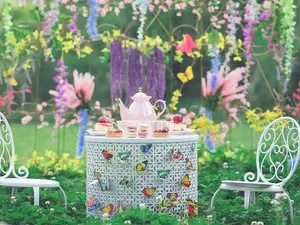
whimsical
[hwim-zi-kuhl]
given to whimsy, capricious humor, excessively playful expression, or fanciful notions; capricious

reconcile
[rek-uhn-sahyl]
to bring into agreement or harmony; make compatible or consistent

maxim
[ma-xim-xim]
a common saying expressing a principle of conduct

syrup
[sir-up]
a thick, sweet liquid often used in cooking or drinks

benevolent
[buh-nev-uh-luhnt]
showing kindness and goodwill

fiddlehead
[fid-l-hed]
one of the young unfurling fronds of certain ferns that are often eaten as greens.

meander
[mee-an-der]
to proceed by or take a winding or indirect course

abrogate
[ab-ruh-geyt]
to abolish by formal or official means; annul by an authoritative act; repeal

fussbudget
[fuhs-buhj-it]
a fussy or needlessly fault-finding person

millefleur
[meel-flur]
having a background sprinkled with representations of flowers, as certain tapestries or pieces of glasswork