
underlie
verbto lie under or beneath; be situated under
What Makes This Word Tick
"Underlie" is like the supporting beams of language. It's an action word, all about being the foundation or hidden force behind something else. Think of it as the quiet but essential player in any scenario, cementing ideas, feelings, or physical structures.
If "Underlie" Were a Person…
If "underlie" were strolling down the street, it'd be the kind of unassuming character who works backstage at a theater production, making sure everything runs without a hitch. A bit like that friend who's always got your back-they're not in the spotlight, but nothing would be the same without them.
How This Word Has Changed Over Time
"Underlie" has stuck to its roots in many ways, remaining steady in its meaning. Originating from Old English, it has always leaned towards denoting support and grounding, although over time, its applications may have grown to encompass more abstract ideas and foundational concepts.
Old Sayings and Proverbs That Use "Underlie"
While not always directly mentioned in proverbs, the concept of "underlie" shines in old sayings like "still waters run deep," reminding us that the most important elements often remain unseen.
Surprising Facts About "Underlie"
It's a word that's pretty self-explanatory once you get to know it. Despite its predictability, "underlie" boasts a curious versatility, sliding into architectural descriptions as well as philosophical discussions.
Out and About With This Word
In everyday conversation, "underlie" might not pop up as often as some of its linguistic peers, but when it does, it cements its place, discussing what's beneath the surface of ideas, emotions, or literal foundations.
Pop Culture Moments Where "Underlie" Was Used
Though less dazzling than its flashier word brethren, "underlie" has been the quiet foundation of character development or plot undercurrents in TV dramas and books where understanding a character's motivations is key.
The Word in Literature
In literature, "underlie" might sense the unseen motivations of complex characters or the unspoken tensions driving a story's plot-fitting right alongside weighty narratives with layers to uncover.
Moments in History with "Underlie"
The underlying tensions before the fall of the Berlin Wall or the hidden forces leading up to major social revolutions can all be expressed through this quietly potent word.
This Word Around the World
Different languages have their own way of expressing "underlie," each with unique turns of phrase that denote foundational aspects or hidden yet powerful influences in their cultures.
Where Does It Come From?
"Underlie" comes from the Old English 'underlicgan,' meaning "to be subject to," and has evolved primarily in its application rather than its core meaning within the English language.
How People Misuse This Word
Sometimes "underlie" gets confused with "underline," though they serve quite different purposes: one being foundational, the other emphatic.
Words It's Often Confused With
- Underline: Drawing attention or emphasis, not serving as a foundation.
- Overlay: Covering something rather than serving as its base.
- Overlie: To lie on top of something, almost opposite in its spatial application.
Additional Synonyms and Antonyms
Synonyms include "support," "fundamentally," and "underscore" (in a metaphorical sense). Antonyms would be "surface" and "superficial."
Want to Try It Out in a Sentence?
Sure thing! Consider this: "The principles of honesty and fairness underlie all aspects of justice." Here, "underlie" highlights the unseen but crucial foundation of the concept.
Explore more words
11 Dumbest Things Middle-Class Americans Waste Money On
See what to cut →

banausic
[buh-naw-sik]
serving utilitarian purposes only; mechanical; practical

schmooze
[shmooz]
to chat idly; gossip

Little-Known Money Hacks That Could Save You Hundreds
Review the list →

Is Staying With the Same Insurer Costing You More?
Explore Your Options →

superhuman
[soo-per-hyoo-muhn]
exceeding normal human abilities

abnegation
[ab-ni-gey-shuhn]
the act of relinquishing or giving up a right, possession, etc.

These 10 Money Moves Could Save Seniors Hundreds
Read more →
subterfuge
[suhb-ter-fyooj]
an artifice or expedient used to evade a rule, escape a consequence, hide something, etc.

torque
[tawrk]
the ability of an element that rotates, like a gear or shift, to overcome resistance

astringent
[uh-strin-juhnt]
causing contraction of body tissues; sharp or severe in manner
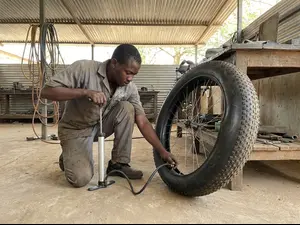
inflate
[in-flate]
exaggerate or make bigger.

foible
[foi-buhl]
a minor weakness or failing of character; slight flaw or defect

pendulous
[pen-juh-luhs]
hanging down loosely

irascible
[ih-ras-uh-buhl]
having or showing a tendency to be easily angered
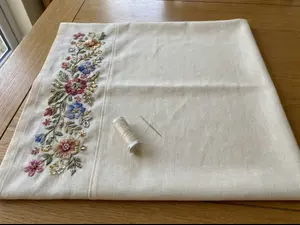
embellishment
[emb-ell-ishm-ent]
a decorative detail or feature added to enhance appearance or effect.

elegant
[el-i-guhnt]
graceful and stylish in appearance or manner

lambaste
[lam-bast]
to criticize harshly

tawdry
[taw-dree]
of little value; gaudy
sabotage
[sab-uh-tahzh]
any underhand interference with production, work, etc., in a plant, factory, etc., as by enemy agents during wartime or by employees during a trade dispute