banality
nounthe quality of being dull, unoriginal, or commonplace.
What Makes This Word Tick
“Banality” names that flavor of dullness that comes from being too common or too predictable. It’s not just “ordinary”—it’s ordinary in a way that feels tired and unoriginal. Compared with “simplicity,” banality carries a critique: the idea that something lacks freshness or spark.
If Banality Were a Person…
Banality would be the coworker who tells the same safe story at every gathering, with the same punchline and the same pauses. They’re not malicious—just relentlessly predictable. You can see every sentence coming, and that’s the whole problem.
How This Word Has Changed Over Time
The core sense of “banality” has largely held: it points to the dullness of the too-familiar. What varies is how widely it’s applied—people use it for conversation, writing, ideas, even routines.
Old Sayings and Proverbs
A proverb-style idea that matches this word is that repeating the obvious doesn’t make it wiser. That captures banality’s vibe: the feeling that a thought is worn thin from overuse.
Surprising Facts
“Banality” often shows up when someone wants to critique tone, not just content—something can be true and still banal. It’s a sharp word for calling out phrases that feel copy-pasted from a mental template. It also tends to cluster near writing and speech, because clichés are where banality becomes most visible.
Out and About With This Word
You’ll often see “banality” in discussions of conversation, commentary, and creative work—places where originality matters. It’s also common in critiques of routines or repeated patterns that start to feel empty. The word fits best when the point is “commonplace to the point of dullness,” not merely “normal.”
Pop Culture Moments Where Banality Was Used
In pop culture, the idea of banality shows up in scenes where characters are stuck in repetitive, beige routines or fed the same canned lines. It’s the background hum of predictability that makes a moment feel flat. When a story wants to highlight how stale something has become, banality is the concept doing the work.
The Word in Literature
In literary writing, “banality” is useful for criticizing voice—showing that a character, narrator, or passage relies on worn-out phrasing. Writers may also invoke it to contrast the ordinary with the startling, making a fresh moment feel even fresher. It signals that the problem isn’t quietness—it’s sameness.
Moments in History with Banality
Throughout history, the concept fits periods when public language becomes formulaic—stock slogans, safe speeches, and repeated talking points. It also applies to everyday life when routines become so repetitive they lose meaning. Banality matters because it describes how the familiar can slide into the dull when nothing new is allowed in.
This Word Around the World
Across languages, this idea is usually expressed with words that mean “trite,” “commonplace,” or “clichéd.” Different cultures may draw the line in different places, but the shared target is the same: overused material that no longer feels alive. The concept travels easily because everyone recognizes stale repetition.
Where Does It Come From?
The origin path listed runs through older European language layers, which fits how the term entered English as a label for the too-common. Even without every link spelled out, the modern meaning aligns with that long-standing idea of “worn by use.”
How People Misuse This Word
People sometimes use “banality” to mean “anything I don’t like,” but it’s more specific than that. It’s about dullness that comes from being unoriginal or overly familiar, not about being quiet, gentle, or simple. If something is plain but fresh, banality isn’t the right label.
Words It’s Often Confused With
“Banality” is often confused with “simplicity,” but simplicity can be elegant while banality is tired. It also overlaps with “ordinariness,” which can be neutral rather than critical. “Boredom” is related, but boredom is a feeling, while banality describes the quality of the thing causing that feeling.
Additional Synonyms and Antonyms
Additional Synonyms: triteness, predictability, staleness Additional Antonyms: freshness, inventiveness, originality
Want to Try It Out in a Sentence?
"The endless small talk sank into banality until someone finally changed the subject."
Explore more words

11 Dumbest Things Middle-Class Americans Waste Money On
See what to cut →

encomium
[en-koh-mee-uhm]
a speech or piece of writing that praises someone or something highly

benevolent
[buh-nev-uh-luhnt]
characterized by or expressing goodwill or kindly feelings

Little-Known Money Hacks That Could Save You Hundreds
Review the list →

Is Staying With the Same Insurer Costing You More?
Explore Your Options →

diluvial
[dih-loo-vee-uhl]
pertaining to or caused by a flood or deluge

anfractuous
[an-frak-choo-uhs]
characterized by windings and turnings; sinuous; circuitous

These 10 Money Moves Could Save Seniors Hundreds
Read more →

bassinet
[bas-uh-net]
a basket with a hood over one end, for use as a baby's cradle

demoralize
[dee-mor-uh-lize]
to cause someone to lose confidence or morale
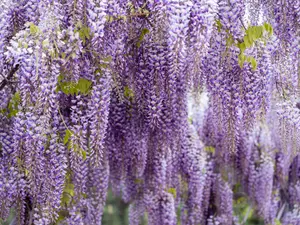
pendulous
[pen-juh-luhs]
hanging down loosely

peregrinate
[per-i-gruh-neyt]
to travel or journey, especially to walk on foot

reversal
[ri-vur-suhl]
a change to an opposite direction or condition

cromlech
[krom-lek]
(no longer in technical use) a megalithic chamber tomb

disseminate
[dih-sem-uh-neyt]
to scatter or spread widely, as though sowing seed; promulgate extensively; broadcast; disperse

loquacious
[loh-kwey-shuhs]
talking or tending to talk much or freely; talkative; chattering; babbling; garrulous

mulct
[muhlkt]
to deprive (someone) of something, as by fraud, extortion, etc.; swindle
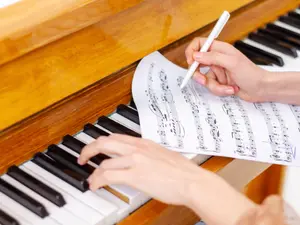
cadenza
[kuh-den-zuh]
an elaborate flourish or showy solo passage, sometimes improvised, introduced near the end of an aria or a movement of a concerto

inchoate
[in-koh-it]
not yet completed or fully developed; rudimentary

retinue
[ret-n-oo]
a body of retainers in attendance upon an important personage; suite