
liminal
adjective
relating to a threshold or an intermediate state of transition.
What Makes This Word Tick
Liminal draws attention to the interval when one familiar status has ended and the next has not yet settled. A graduation ceremony makes that interval visible: students arrive in one role and leave with another.
If Liminal Were a Person...
Liminal would stand in a doorway with one foot on either side. They would be curious about what comes next without pretending to know the answer.
How This Word Has Changed Over Time
Liminal has moved beyond specialized discussions of thresholds and ritual into descriptions of buildings, journeys, and personal change. The threshold remains central even when the doorway is figurative.
Old Sayings and Proverbs
The saying "One door closes and another opens" does not use liminal. It captures the experience of moving between one stage and another.
Surprising Facts
An airport terminal is liminal because travelers are between their departure point and destination. Its emptiness is incidental; a crowded departure lounge can have the same transitional character.
Out and About With This Word
The days between leaving one job and starting another can feel liminal, with the old routine gone and the new one still unformed. A half-packed home on moving day gives that same interval a physical setting.
Pop Culture Moments Where Liminal Was Used
It would fit naturally alongside Spirited Away, where Chihiro crosses from a familiar world into an unfamiliar one. It also suits Alice in Wonderland, where Alice passes into a place governed by different rules. In both cases, liminal describes a threshold between recognizable worlds.
The Word in Literature
In Lewis Carroll's Alice's Adventures in Wonderland, the rabbit hole carries Alice away from the rules of her familiar world. That passage is a liminal episode, with the journey itself separating ordinary life from Wonderland.
Moments in History with Liminal
Arnold van Gennep's The Rites of Passage, published in 1909, distinguished separation, transition, and incorporation in ceremonies of social change. His account gave later anthropology an influential way to examine the liminal interval between established roles.
This Word Around the World
The French noun seuil means threshold and also appears in figurative expressions about beginnings or limits. It names the boundary that liminal situations occupy, while the English adjective describes a relationship to that boundary.
Where Does It Come From?
Liminal derives from Latin limen, meaning threshold. That origin explains why the term works for both literal boundaries and figurative transitions.
How People Misuse This Word
Liminal does not mean merely strange or empty. An unusual room is liminal only when a meaningful sense of transition or in-betweenness is involved.
Words It's Often Confused With
Liminal is sometimes confused with subliminal, meaning below the threshold of conscious awareness. The shared threshold root does not make them interchangeable.
Additional Synonyms and Antonyms
Additional synonyms: intermediary, threshold-like Additional antonyms: final, fixed
Want to Try It Out in a Sentence?
The quiet station felt liminal between the last train and the first morning departure.
Explore more words


pleiades
[plee-uh-deez]
a cluster of stars in the constellation taurus that includes six stars in the form of a very small dipper.

incriminate
[in-krim-uh-neyt]
to accuse of or present proof of a crime or fault



archetype
[arch-etyp-e]
a typical example or original model from which others are copied or derived.

mournful
[morn-ful]
feeling or expressing sorrow or grief


idolize
[ahy-duh-lahyz]
to admire or love someone excessively

formless
[f-orml-ess]
without a clear shape or structure; amorphous or undefined.

demagogue
[dem-uh-gog]
a political leader who seeks support by appealing to the desires and prejudices of ordinary people rather than by using rational argument

parlous
[pahr-luhs]
obsolete; clever; shrewd

astonish
[uh-ston-ish]
to greatly surprise or amaze someone

criterion
[krahy-teer-ee-uhn]
a standard of judgment or criticism; a rule or principle for evaluating or testing something
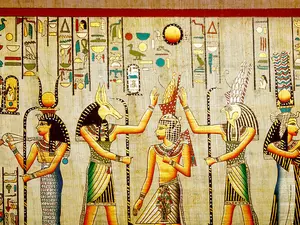
zoomorphic
[zoh-uh-mawr-fik]
characterized by a highly stylized or conventionalized representation of animal forms

glare
[glair]
to stare angrily or shine intensely

ethereal
[ih-theer-ee-uhl]
extremely delicate and light in a way that seems too perfect for this world

superfluous
[soo-pur-floo-uhs]
being more than is sufficient or required; excessive

deceitful
[dih-seet-ful]
dishonest or misleading in behavior or actions

galvanize
[gal-vuh-nahyz]
to stimulate by or as if by a galvanic current