
quintessence
nounthe pure and concentrated essence of a substance
What Makes This Word Tick
Ah, "quintessence"! It's the distillation of purity, the heart of the matter, if you will. This word hails from an ancient concept in classical philosophy that suggested a fifth element beyond earth, water, air, and fire. In modern usage, it represents the most perfect or typical example of a quality or class. Quintessentially delightful, isn't it?
If Quintessence Were a Person…
If you ran into Quintessence at a party, they'd be the one everyone admires from afar - charm personified, exuding pure essence of whatever the gathering sought. Always impeccably dressed and speaking with eloquence, they are the standard by which all are judged. Probably an expert in mixology or cheese plates, too.
How This Word Has Changed Over Time
Originally referring to the fifth essence believed by alchemists to be the material that filled celestial bodies, "quintessence" evolved to signify the most perfect representation of something. Today, it's often used to highlight the epitome of any given quality, showing just how far it's come from its mystical origins.
Old Sayings and Proverbs That Use Quintessence
Although not commonly found in old proverbs, the essence (pun intended) of "quintessence" is there. Take, for example, "the cream of the crop," which reflects the concept of something being the finest quality or nature.
Surprising Facts About Quintessence
Did you know some scientists use "quintessence" to describe dark energy hypothesized in cosmology? It's as if this word never strayed far from its celestial roots! It's a rare word that blends scientific inquiry with everyday elegance.
Out and About With This Word
You'd likely spot "quintessence" at a museum, perhaps in a description highlighting a masterpiece's purity or genius. Or perhaps at a wine-tasting event, where the host may describe the selection as the quintessence of Bordeaux.
Pop Culture Moments Where Quintessence Was Used
In pop culture, consider any thorough portrayal that captures the spirit of an era, like Don Draper as the quintessence of 1960s advertising in the show "Mad Men." It's a favorite in narratives that aim to capture purity or exemplary cases.
The Word in Literature
"Quintessence" makes a cameo in Shakespeare's "Hamlet," no less! When Hamlet muses on humanity's nature, he speaks of man as "the quintessence of dust." Its aristocratic sound and meaning make it a hit in classic literature and philosophical texts.
Moments in History with Quintessence
Think of moments like the signing of the Declaration of Independence. Quintessence could describe the pure intent of freedom and democracy those founding fathers aimed to embody - the epitome of a bold new vision.
This Word Around the World
While modern languages may lack a direct analogue for "quintessence," most cultures appreciate the "heart" or "soul" of something - like the French "essentiel" or the Japanese "kokoro," which convey similar depth and concentration.
Where Does It Come From?
Straight out of Middle English, with a pit stop in Latin, "quintessence" has journeyed through linguistic history from "quinta essentia," meaning the fifth essence. Its etymology tells the tale of a word that was always destined for greatness.
How People Misuse This Word
Some might throw around "quintessence" just to sound fancy, mistakenly using it to measure quantity instead of quality. Remember, it's about purity and concentration, not sheer number.
Words It's Often Confused With
- Essence: Both share a sense of underlying quality, but "quintessence" is the most perfect form.
- Epitome: Refers to a perfect example, much like "quintessence," but less about essence and more about summary.
- Paragon: Both imply the peak of perfection, yet "paragon" leans more towards moral or physical standards.
Additional Synonyms and Antonyms
Synonyms include "embodiment," "epitome," and "apotheosis." As for antonyms, think "imperfection" or "flaw."
Want to Try It Out in a Sentence?
Consider using it like this: "Her cooking was the quintessence of Italian cuisine, capturing the very soul of each dish with every bite."
Explore more words
11 Dumbest Things Middle-Class Americans Waste Money On
See what to cut →
dissolve
[dih-zolv]
to mix into a liquid so that it becomes part of the solution

hebetude
[heb-i-tood]
the state of being dull; lethargy

Little-Known Money Hacks That Could Save You Hundreds
Review the list →

Is Staying With the Same Insurer Costing You More?
Explore Your Options →

rigmarole
[rig-muh-rohl]
confused, incoherent, foolish, or meaningless talk

memo
[mem-oh]
a short written message, often within an organization

These 10 Money Moves Could Save Seniors Hundreds
Read more →
caseous
[key-see-uhs]
cheeselike, especially in appearance, smell, or consistency
sieve
[siv]
an instrument with a meshed or perforated bottom for straining liquids

underlie
[uhn-der-lahy]
to lie under or beneath; be situated under

ascetic
[uh-set-ik]
relating to asceticism, the doctrine that one can reach a high spiritual state through the practice of extreme self-denial or self-mortification

renegade
[ren-i-geyd]
of or like a renegade (a person who deserts a party or cause for another); traitorous

provident
[prov-i-duhnt]
having or showing foresight; providing carefully for the future
ocher
[oh-ker]
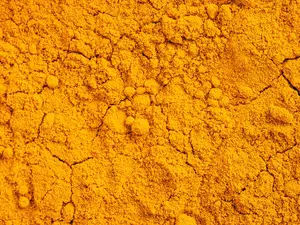
any of a class of natural earths, mixtures of hydrated oxide of iron with various earthy materials, ranging in color from pale yellow to orange and red, and used as pigments

distend
[dih-stend]
to spread in all directions; expand; swell

obsequious
[uhb-see-kwee-uhs]
characterized by or showing servile obedience and excessive eagerness to please; deferential; fawning:

dodecahedron
[doh-dek-uh-hee-druhn]
a three-dimensional shape having twelve plane faces, in particular a regular solid figure with twelve equal pentagonal faces

nonpareil
[non-puh-rel]
having no equal; peerless

mephitic
[muh-fit-ik]
offensive to the smell