
obstreperous
adjectivenoisy and difficult to control
What Makes This Word Tick
"Obstreperous" has quite the personality! It's one of those words that sounds just like what it means: noisy and difficult to control. Imagine a group of rowdy children refusing to listen to their teacher, and you've got the essence of obstreperousness. The word demands attention and doesn't mind causing a little trouble along the way.
If Obstreperous Were a Person…
Picture someone who never walks but always marches, a spirited soul who never shies away from a spirited debate. Their voice is as loud as their opinions, and they're often found in the middle of a kerfuffle. They might be frustrating at times, but life would be dull without them in the mix!
How This Word Has Changed Over Time
Over the centuries, "obstreperous" has stayed true to its roots, never straying far from its original meaning. While some words evolve or soften with time, obstreperous has hung onto its unruly charm. It's still the perfect descriptor for anything or anyone making a delightful ruckus.
Old Sayings and Proverbs That Use Obstreperous
While "obstreperous" might not appear in old adages, the spirit of it can be seen in family sayings like "You've got to crack a few eggs to make an omelet," hinting at the necessary chaos before creation.
Surprising Facts About Obstreperous
"Obstreperous" comes from the Latin word "obstreperus," meaning "clamorous or boisterous." It first entered the English language in the late 16th century, proving that loud behavior has always been a part of human nature. It's a bit of a tongue-twister, but once you have it down, it rolls off with aplomb.
Out and About With This Word
In daily conversation, you might use "obstreperous" to describe a loud party next door or perhaps a meeting disrupted by lively debate. It's not just for people; a pet that's impossible to control or a storm that's particularly noisy can be obstreperous too.
Pop Culture Moments Where Obstreperous Was Used
This word might not headline movies, but obstreperous characters make for great TV. Think of sitcoms with larger-than-life characters who always speak their minds or beloved film scenes where chaos ensues and laughter follows.
The Word in Literature
"Obstreperous" finds its home comfortably in literature to describe characters brimming with life and vigor. It's a favorite in classic novels when an author wants to add a bit of color to a scene filled with boisterous energy and drama.
Moments in History with Obstreperous
The Boston Tea Party in 1773 might have been quite "obstreperous," with colonists making a loud political statement by throwing tea into the harbor. It was a rowdy moment that signaled much deeper reform trembling on the horizon.
This Word Around the World
In Italian, you might describe something obstreperous as "chiassoso," carrying the same sense of noisy disruption. The feeling of "obstreperous" is universal, often flagged in languages with onomatopoeic words that mimic the sounds of what they describe.
Where Does It Come From?
The origins of "obstreperous" lie in Latin, combining "ob-" meaning against and "streperus," meaning noise, which together elegantly encapsulates the meaning. It's a word that's never been shy about its roots, just like the behaviors it describes.
How People Misuse This Word
Sometimes, people might use "obstreperous" simply to mean loud, missing its subtler nuances of defiance and unruliness. Wouldn't just calling someone loud be simpler? Yes, but far less fun!
Words It's Often Confused With
- Boisterous: Both words involve noise, but "boisterous" lacks the defiance and disruption.
- Rambunctious: Another lively word, but it's more playful and less likely to stir the pot.
- Rowdy: Similar in spirit but doesn't imply the same willful opposition.
Additional Synonyms and Antonyms
- Synonyms: Unruly, loud, clamorous
- Antonyms: Calm, restrained, quiet
Want to Try It Out in a Sentence?
The once-peaceful town square turned obstreperous when the marching band decided to practice during the mayor's speech, much to the delight of passersby and the mayor's chagrin.
Explore more words
11 Dumbest Things Middle-Class Americans Waste Money On
See what to cut →

numinous
[noo-muh-nuhs]
spiritual or supernatural
obsequious
[uhb-see-kwee-uhs]
characterized by or showing servile obedience and excessive eagerness to please; deferential; fawning:

Little-Known Money Hacks That Could Save You Hundreds
Review the list →

Is Staying With the Same Insurer Costing You More?
Explore Your Options →

arable
[ar-uh-buhl]
capable of producing crops; suitable for farming; suited to the plow and for tillage
yap
[y-ap]
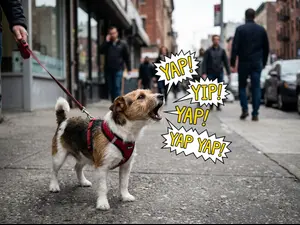
to bark sharply or shrilly, often referring to small dogs; also used informally for talking excessively.

These 10 Money Moves Could Save Seniors Hundreds
Read more →

snickersnee
[snik-er-snee]
a knife, especially one used as a weapon.

retinue
[ret-n-oo]
a body of retainers in attendance upon an important personage; suite

bridge
[brij]
a structure spanning a physical obstacle, such as a river

hinder
[hin-der]
to make it difficult for someone to do something or for something to happen

bestow
[b-est-ow]
to present or grant something as a gift or honor.

adroit
[uh-droit]
expert or nimble in the use of the hands or body

magnanimous
[mag-nan-uh-muhs]
generous in forgiving an insult or injury; free from petty resentfulness or vindictiveness

abdicate
[ab-di-kayt]
to give up a position, usually one of leadership

complainer
[k-ompl-ain-er]
a person who frequently expresses dissatisfaction or grievances.

fulminate
[fuhl-muh-neyt]
to issue denunciations or the like

galvanize
[gal-vuh-nahyz]
to stimulate by or as if by a galvanic current

unscrupulous
[uhn-skroo-pyuh-luhs]
having or showing no moral principles; not honest or fair