
instauration
nounrenewal or restoration
What Makes This Word Tick
"Instauration" is quite the mouthful - a word that's seldom found in casual conversation but carries a rich meaning. It refers to the act of renewing or restoring something, suggesting a return to a former state of glory. It's like polishing up an old piece of furniture that's seen better days until it gleams with life once more.
If Instauration Were a Person…
Imagine Instauration as a wise old craftsman, lovingly tending to antiques and treasures, bringing out their hidden beauty. He appreciates the past but realizes that sometimes, things need a bit of care to shine again. He's the type of person who'd meticulously restore a classic car or refurbish a timeworn library.
How This Word Has Changed Over Time
Instauration hasn't exactly been a word star in its journey through linguistic history; it's remained rather consistent in its meaning. Originating from the Latin "instaurare," meaning to renew or restore, it has meandered through centuries with its definition largely unaltered, albeit infrequently used.
Old Sayings and Proverbs That Use Instauration
While "instauration" doesn't have a direct place in classic proverbs, the concept is timeless in sayings like "what is old is new again." This captures the heart of instauration, where renewal breathes new life into the old.
Surprising Facts About Instauration
You might be intrigued to know that "Instauration" was the title of a philosophical work by Sir Francis Bacon, who aimed to overhaul the sciences. It's not every day a word gets to headline such a grand vision of knowledge restructuring!
Out and About With This Word
You'd most likely encounter "instauration" in academic or philosophical texts, where it discusses ideas of restoration and rejuvenation in intellectual or cultural contexts. It's the kind of word that enjoys mingling in refined company.
Pop Culture Moments Where Instauration Was Used
"Instauration" hasn't exactly made waves in pop culture; it's more of a backstage term. However, its essence is felt in every reboot and remake film or TV show, demonstrating how old concepts are continually revitalized for new generations.
The Word in Literature
In literary circles, "instauration" might be heralded in discussions of revival periods, especially when analyzing works that reimagine ancient settings or ideologies. Authors who write about cultural renewals or historical revisions would have an affinity for this word.
Moments in History with Instauration
Think of the Renaissance - perhaps the ultimate historical instauration - when art, culture, and science blossomed anew from the shadows of the Middle Ages. It's an era that perfectly embodies the spirit of this word.
This Word Around the World
Globally, the idea of instauration manifests uniquely in each culture. In Japan, there's "kaizen," which speaks to continuous improvement, sharing a whisper of the same restorative spirit. Across languages, restoration brings hope and continuity.
Where Does It Come From?
Derived from Latin, "instaurare," meaning "to renew, restore," the word nicely encapsulates its etymology, never straying far from its roots even as it evolved through the ages.
How People Misuse This Word
Some might confuse "instauration" with merely building something new, forgetting the essential aspect of restoration involved. It's about renewal, not creation from scratch.
Words It's Often Confused With
- Restoration: While similar, restoration focuses on repairing or returning an item to its original condition, while instauration can imply an improved or renewed state.
- Renovation: Typically used in contexts of building enhancement, whereas instauration holds a broader, more philosophical sense.
- Resurrection: This implies bringing back to life rather than renewing or restoring a prior state.
Additional Synonyms and Antonyms
Synonyms include revival, renewal, and renovation. Antonyms might be destruction, neglect, or decay - words that shun the light of revival.
Want to Try It Out in a Sentence?
"The committee's goal was nothing less than the instauration of the old town square, preserving its historical character while reviving its vibrancy."
Explore more words

11 Dumbest Things Middle-Class Americans Waste Money On
See what to cut →

auriferous
[aw-rif-er-uhs]
yielding or containing gold
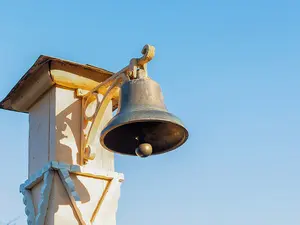
tocsin
[tok-sin]
a bell used to sound an alarm

Little-Known Money Hacks That Could Save You Hundreds
Review the list →

Is Staying With the Same Insurer Costing You More?
Explore Your Options →

retort
[ri-twart]
to return (an accusation, epithet, etc.) upon the person uttering it

discursive
[dih-skur-siv]
proceeding by reasoning or argument rather than intuition

These 10 Money Moves Could Save Seniors Hundreds
Read more →

nimble
[nim-buhl ]
quick and light in movement; moving with ease; agile; active; rapid

scintillating
[sin-tl-ey-ting]
witty; brilliantly clever

peer
[p-eer]
to look closely or carefully, often with difficulty; also refers to someone of equal rank or status.

staid
[steyd]
of settled or sedate character; not flighty or capricious

fisticuffs
[fis-tuh-kuhfs]
combat with the fists

caseous
[key-see-uhs]
cheeselike, especially in appearance, smell, or consistency

postulate
[pos-chuh-leyt]
to claim or assume the existence or truth of, especially as a basis for reasoning or arguing

threnody
[thren-uh-dee]
a poem, speech, or song of lamentation, especially for the dead; dirge; funeral song

undulating
[uhn-juh-leyt-ing]
having a sinuous or wavelike shape or motion

chapfallen
[chap-faw-len]
dejected or dispirited

prescient
[presh-uhnt]
having prescience, or knowledge of things or events before they exist or happen; having foresight

wormhole
[wurm-hohl]
a hole made by a burrowing or gnawing worm, as in timber, nuts, etc.