
raze
verb, verbto tear down; demolish; level to the ground to shave or scrape off
What Makes This Word Tick
"Raze" is an action-packed word that leaves nothing standing in its wake. It speaks to the act of completely destroying or leveling to the ground. Whether it's a building, a city, or even a metaphorical empire, if it's razed, it's taken down utterly and thoroughly.
If Raze Were a Person…
Raze would be the demolition expert at the party, ready to tear down old walls and make room for new beginnings. A bit intense for some but necessary for those needing a fresh start. Imagine a no-nonsense type wearing a hard hat and carrying a sledgehammer, always on standby for the next big project.
How This Word Has Changed Over Time
Over centuries, "raze" has maintained its razor-sharp edge, always meaning to demolish completely. Its roots are consistent, coming from back when kings tore down conquered fortresses. However, the word itself has avoided any softening or peacetime connotations, preserving its destructive legacy.
Old Sayings and Proverbs That Use Raze
While full sayings are hard to come by, the spirit of "raze" finds echoes in expressions like "leave not a stone unturned" when it comes to dismantling something entirely. The idea of thoroughness and completeness is key.
Surprising Facts About Raze
Did you know that "raze" shares a root with "razor"? Both words stem from the Latin word "radere," which means "to scrape or shave." Hence, when you raze a building, you're essentially scraping it away from the earth's surface!
Out and About With This Word
You might hear "raze" in discussions about urban redevelopment when old structures are replaced with new ones. It's also popular in historical documentaries about ancient conquests or battles when cities were often razed.
Pop Culture Moments Where Raze Was Used
"Raze" shows up in movies where entire cities face destruction from alien invasions or natural disasters, and the protagonist must prevent or respond to the devastation. It's also frequently dramatized in video games that involve strategy and rebuilding.
The Word in Literature
In literature, "raze" fits neatly into epic tales of war and conquest. Think along the lines of Tolstoy or Homer, where armies march and cities fall. It's a word that lends gravity and finality, perfect for dramatic narratives.
Moments in History with Raze
The burning of Carthage in 146 B.C. during the Third Punic War is a prime example where this word comes alive. The city was razed to the ground by the Romans, demonstrating "total destruction" in a dramatic historical moment.
This Word Around the World
In other languages, "raze" translates to similar destructive terms. In French, it's "raser," and in Spanish, it's "arrasar." The concept is universally appreciated in describing complete obliteration, whether geographic or metaphorical.
Where Does It Come From?
"Raze" hails from Middle English "rasen," derived from the Latin "radere." The lineage is all about scraping or shaving away, which has somehow held up remarkably well across centuries, sticking close to its roots.
How People Misuse This Word
It's often confused with "raise," which is almost its antonym. While "raze" means to demolish, "raise" means to lift up or construct. Also, people might mistakenly use "raze" figuratively in settings where a softer word might suffice.
Words It's Often Confused With
- Raise: To lift or build up.
- Erase: To remove writing or marks from a surface rather than demolishing a structure.
- Raise (spelling variant): Often mistaken due to similar pronunciation but with entirely different meanings.
Additional Synonyms and Antonyms
Synonyms for "raze" include demolish, destroy, obliterate, and flatten. Antonyms are build, construct, erect, and raise - an amusing juxtaposition of sound but not meaning.
Want to Try It Out in a Sentence?
The fearless leader declared that the enemy's fortress would be razed to the ground by dawn, leaving nothing but dust in its place.
Explore more words
11 Dumbest Things Middle-Class Americans Waste Money On
See what to cut →

cumulative
[kyoo-myuh-luh-tiv]
increasing or growing by accumulation or successive additions

rejoinder
[ri-join-der]
an answer to a reply; response

Little-Known Money Hacks That Could Save You Hundreds
Review the list →

Is Staying With the Same Insurer Costing You More?
Explore Your Options →

precondition
[pree-kon-dish-un]
a condition that must be met before something else can happen

scintillating
[sin-tl-ey-ting]
witty; brilliantly clever

These 10 Money Moves Could Save Seniors Hundreds
Read more →

fussbudget
[fuhs-buhj-it]
a fussy or needlessly fault-finding person

chapfallen
[chap-faw-len]
dejected or dispirited

tautology
[taw-tol-uh-jee]
an instance of such repetition

abridge
[uh-brij]
to shorten by omissions while retaining the basic contents

exacerbation
[ig-zas-er-bey-shuhn]
the act of making a negative situation feel worse than it is
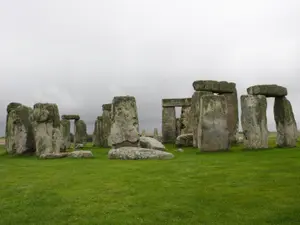
cromlech
[krom-lek]
(no longer in technical use) a megalithic chamber tomb

aphelion
[uh-fee-lee-uhn]
the point farthest from the sun in the path of an orbiting celestial body (such as a planet)

prate
[prayt]
to talk foolishly or at length about trivial matters

penniless
[pen-i-lis]
without any money whatsoever; totally impoverished; destitute
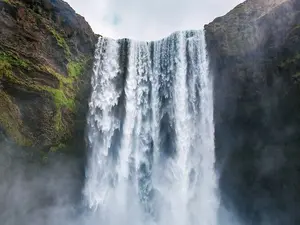
cascade
[kas-keyd]
anything that resembles a waterfall, especially in seeming to flow or fall in abundance

coruscating
[kawr-uh-skeyt-ing]
flashing or sparkling

serendipitous
[ser-uhn-dip-i-tuhs]
come upon or found by accident; fortuitous