curved
Verbhaving a rounded or arc-like shape
What Makes This Word Tick
Curved describes something that bends away from a straight line into an arc or rounded shape. It emphasizes contour and flow rather than corners and angles. Compared with bent, curved often feels smoother and less forced.
If Word Were a Person
This word would be the person who never takes the sharp turn, choosing a gentler arc instead.
How This Word Has Changed Over Time
Curved has stayed a straightforward shape word, used across design, nature, and movement. In modern use, it often shows up in product and visual descriptions where form matters.
Old Sayings and Proverbs
There isn’t a fixed proverb featuring curved, but proverb-style reminders that “the straight path isn’t the only path” echo how curve imagery is used.
Surprising Facts
Curved can signal comfort or intention in design, because arcs often feel softer preventing harsh lines. That’s why it’s common in descriptions of paths, furniture, and typography.
Out and About With This Word
You’ll see curved in architecture, art, road signs, and everyday object descriptions. It’s especially common where shape affects function, like handles, screens, and routes.
Pop Culture Moments
Visual storytelling often uses curved lines to feel friendly or organic, while straight lines can feel rigid or severe.
The Word in Literature
Writers use curved to guide the reader’s eye through a scene, shaping movement and perspective. It can soften a setting without adding extra explanation.
Moments in History
Curved forms show up in historical design and engineering wherever arches and rounded structures solve practical problems and create distinctive styles.
This Word Around the World
Most languages have a basic word for “bent” or “arched,” and many distinguish between sharp bends and smooth curves. The shared idea is departure from straightness.
Where Does It Come From
The inventory traces it to Latin curvus (“bent, curved”), which matches the enduring shape meaning.
How People Misuse This Word
People sometimes use curved when they mean angled. Curved implies a smooth arc, while angled implies a sharp corner.
Words It’s Often Confused With
Bent can imply force or damage, while curved can be natural or designed. Arched suggests a specific upward curve, while curved can point in any direction.
Additional Synonyms and Antonyms
Additional Synonyms: sweeping, arc-shaped, rounded Additional Antonyms: unbent, straightened, level
Example Sentence
"The artist chose a curved line to make the design feel softer and more welcoming."
Explore more words

11 Dumbest Things Middle-Class Americans Waste Money On
See what to cut →

submissive
[sub-mis-iv]
ready to conform to the authority or will of others

pretentious
[pri-ten-shuhs]
characterized by assumption of dignity or importance, especially when exaggerated or undeserved

Little-Known Money Hacks That Could Save You Hundreds
Review the list →

Is Staying With the Same Insurer Costing You More?
Explore Your Options →
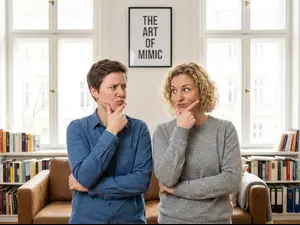
mimic
[mim-ik]
to imitate someone or something, often for amusement
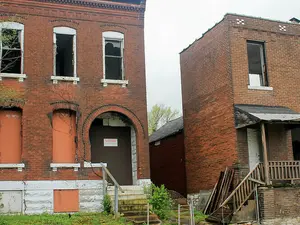
blight
[blahyt]
any cause of impairment, destruction, ruin, or frustration

These 10 Money Moves Could Save Seniors Hundreds
Read more →

easy-going
[ee-zee-goh-ing]
relaxed and tolerant in attitude or approach

boba
[boh-buh]
a sweet drink of taiwanese origin that consists of tea mixed typically with milk or fruit syrup and small balls of tapioca.

cascade
[kas-keyd]
anything that resembles a waterfall, especially in seeming to flow or fall in abundance

insolent
[in-suh-luhnt]
impudent, contemptuous

surmount
[ser-mount]
to prevail over

prop
[pr-op]
an object used for support or as part of a performance; also refers to giving assistance or reinforcement.

mawkish
[maw-kish]
having a mildly sickening flavor; slightly nauseating

raze
[reyz]
to shave or scrape off

candy
[kan-dee]
a sweet food made with sugar and often flavoring (such as chocolate) and filling

retinue
[ret-n-oo]
a body of retainers in attendance upon an important personage; suite

conjecture
[kuhn-jek-cher]
the formation or expression of an opinion or theory without sufficient evidence for proof
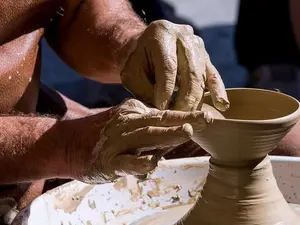
malleable
[mal-ee-uh-buhl]
capable of being extended or shaped by hammering or by pressure