piebald
adjectivehaving patches of black and white or of other colors; parti-colored
What Makes This Word Tick
The word "piebald" is one of those delightful terms that stirs up images in the mind's eye even if you've never encountered it before. It refers to something marked by patches of two different colors - often black and white. It's a term you're more likely to hear at the horse stables than the coffee shop, but it's undeniably fun to say, with its hint of a pie crust and a wild animal dash.
If Piebald Were a Person…
Picture someone slightly eccentric, maybe a whimsical artist type who wears colorful mismatched socks on purpose. This person thrives on standing out - blending isn't their style. They probably have a distinctive laugh and might paint their house in stripes just because they can.
How This Word Has Changed Over Time
While "piebald" hasn't strayed too far from its origins, which describe animals with irregular patches of color, it's taken on a more metaphorical flavor in creative writing and art circles. It also once had a cousin, "pyed," used around Shakespeare's time, meaning multicolored, but now piebald takes center stage.
Old Sayings and Proverbs That Use Piebald
Piebald hasn't hit the big time in the world of proverbs, likely keeping its appearances more niche. If it did, you might imagine expressions like, "A piebald horse hides no disguise," emphasizing transparency.
Surprising Facts About Piebald
Piebald patterns occur naturally due to genetics, commonly seen in horses, dogs, and birds. But here's the kicker - there's no specific animal gene named after pies, which seems like a delicious oversight.
Out and About With This Word
Out in the wild, you'll find piebald deer and rabbits of striking contrast - nature's optical illusions. Zoo-goers delight in spotting the odd piebald peacock flaunting their patchwork plumage.
Pop Culture Moments Where Piebald Was Used
The world of Harry Potter gifted us with the spirited Hippogriff Buckbeak, often depicted with piebald plumage. Musicians and theatrical productions have embraced piebald aesthetics, translating the concept into eclectic stage costumes and set designs.
The Word in Literature
Piebald creatures have galloped through many a novel, embodying themes of duality and uniqueness. Their presence often symbolizes the coexistence of opposites and the beauty found in diversity.
Moments in History with Piebald
During the Baroque period, piebald horses carried European nobility across terrain - a sight to behold and a status symbol of sorts. At the same time, piebald patterns adorned the tapestries of the well-to-do, showcasing fashion-forward thinking.
This Word Around the World
In Japan, piebald is recognized in the traditional cat figure, Maneki-neko, who beckons good luck with its patchy coat. Across Europe, piebaldness is celebrated in many autumn fairs where animals are paraded and prized for their unique colors.
Where Does It Come From?
Our charming term "piebald" originates from combining "pie," short for magpie, a bird known for its black-and-white feathers, and "bald," an old English term for a white patch or spot. Who knew an animal and a bare spot would make such a fetching word couple?
How People Misuse This Word
Occasionally, someone might call a monotone spotted animal piebald, which strictly speaking, should involve two distinct colors. Remember, it needs that contrast to earn its stripes!
Words It's Often Confused With
- Dappled: Often used for gentle, mottled patterns in animals but typically without the stark contrast required for piebald.
- Patchwork: While patchy, this word is associated more with quilts and textiles than with paint jobs of the animal kingdom.
- Brindle: Refers to a more tiger-striped look, frequently without the distinct two-color requirement of piebald.
Additional Synonyms and Antonyms
Synonyms include "spotted" or "particolored," emphasizing the multi-colored aspect. As for antonyms, consider "solid" or "uniform," each describing a consistent, single-color look.
Want to Try It Out in a Sentence?
At the county fair, children marveled at the impressive piebald pony, whose black and white patches looked as though they'd been painted by an artist's hand.
Explore more words

11 Dumbest Things Middle-Class Americans Waste Money On
See what to cut →

convey
[kuhn-vey]
to communicate; impart; make known

jubilant
[joo-buh-luhnt]
showing great joy, satisfaction, or triumph; rejoicing; exultant

Little-Known Money Hacks That Could Save You Hundreds
Review the list →

Is Staying With the Same Insurer Costing You More?
Explore Your Options →
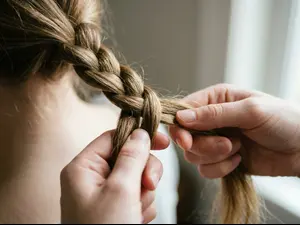
braid
[br-aid]
a pattern formed by weaving together three or more strands, often of hair or fabric.
jabberwocky
[jab-er-wok-ee]
invented or meaningless language; nonsense

These 10 Money Moves Could Save Seniors Hundreds
Read more →

bestow
[b-est-ow]
to present or grant something as a gift or honor.

piggyback
[pig-ee-bak]
to attach or ally to as or as if part of the same thing

equanimity
[ee-kwuh-nim-i-tee]
mental or emotional stability or composure, especially under tension or strain; calmness; equilibrium
criterion
[krahy-teer-ee-uhn]
a standard of judgment or criticism; a rule or principle for evaluating or testing something

backup
[bak-uhp]
support or reinforcement; a copy of data for safety

mediate
[mee-dee-eyt]
to act between parties to effect an agreement, compromise, reconciliation, etc.
boorish
[boor-ish]
crude, insensitive

sanguine
[sang-gwin]
reddish; ruddy

grandiloquent
[gran-dil-uh-kwuhnt]
speaking or expressed in a lofty style, often to the point of being pompous or bombastic

core
[kor]
the central or most important part of something

aphelion
[uh-fee-lee-uhn]
the point farthest from the sun in the path of an orbiting celestial body (such as a planet)
heinous
[hay-nus]
shockingly wicked or reprehensible