
lucubrate
verbto write learnedly
What Makes This Word Tick
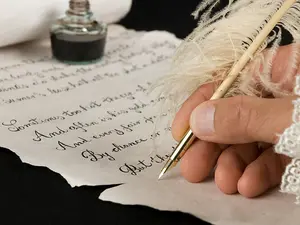
"Lucubrate" is a verb that evokes the image of burning the midnight oil, diving into study or writing with a fervor that might leave you needing a strong cup of coffee by dawn. It's the kind of academic zeal that might recall student days or a hobby turned late-night obsession. What's better than a word that sounds as classy as a vintage library lamp?
If Lucubrate Were a Person…
Lucubrate would be the type who wears bifocals perched at the tip of the nose, with a perpetual ink stain on one finger. This person would definitely bring a thick hardcover book to a party, just in case a quiet corner presented itself for some light reading.
How This Word Has Changed Over Time
Lucubrate has stayed relatively under the radar over the years. This word has stuck close to its roots, focusing on the intellectual rather than evolving into some mainstream expression. It's like that one friend who never seems to age, always with a tie to the antique.
Old Sayings and Proverbs That Use Lucubrate
While lucubrate might not be in the folk wisdom hall of fame, one could imagine it fitting into a sage piece of advice: "To lucubrate with heart is to find wisdom beyond the pages." It captures the spirit of old-world diligence and a quest for knowledge.
Surprising Facts About Lucubrate
Despite its obscure nature, lucubrate has a noble aura, hinting at class and depth. It's the kind of word that can make even a simple study session sound as if it's something out of a mystery novel, complete with whispers and creaky floors.
Out and About With This Word
Lucubrate fits right in on a college campus or at a literary society meeting-a perfect word to use when someone asks how you spent the weekend, especially if it involved poring over dusty tomes or drafting the next great novel.
Pop Culture Moments Where Lucubrate Was Used
Lucubrate hasn't quite made it to pop culture fame, probably for the best as its charm lies in its rarity. Picture it in a historical drama or period piece, where deep intellectual work is the order of the day.
The Word in Literature
Lucubrate would be right at home in a scholarly tome or a classic novel dripping with Victorian decorum. It's the kind of word that fits in on the lips of a character like Sherlock Holmes or anyone rummaging for clues in diaries and documents.
Moments in History with Lucubrate
Think of the candlelit hours writers and inventors have spent through history, perhaps even Ben Franklin at his desk, lucubrating their way to ideas and words that would shape nations. It captures the essence of those immortalized nights.
This Word Around the World
Internationally, the concept of "lucubrate" might translate to the late-night study sessions seen in cities like Tokyo or Paris, where passion for learning transcends language barriers. It's universal, the midnight oil ritual is recognized far and wide.
Where Does It Come From?
Lucubrate comes from the Latin word “lucubratus,” meaning to work by lamplight. It's a word birthed from the classic scenes of solitary scholars working through the night in pursuit of enlightenment.
How People Misuse This Word
Lucubrate is often mistaken for elaborate one's own thoughts in a mundane setting. True lucubrating involves a deeper commitment to learning than just outlining ideas at the kitchen table.
Words It's Often Confused With
- Elucidate: Although similar sounding, elucidate refers to making something clear, while lucubrate is more about the act of studying.
- Laborate: Not an actual word, but sometimes confused due to its semblance to "labor."
Additional Synonyms and Antonyms
While lucubrate doesn't have exact synonyms, its cousins like "study," "scrutinize," and "burn the midnight oil" share thematic similarities. Antonyms might include "ignore" or "skim," suggesting a lack of depth or intensity.
Want to Try It Out in a Sentence?
After midnight, Clara could be found lucubrating in her small attic, surrounded by books, her mind alive with the thrill of discovery.
Explore more words
spondee
[spon-dee]
in poetry, a "foot" of two syllables, both of which are long in quantitative meter or stressed in accentual meter

increase
[inkr-eas-e]
to grow in size, number, or intensity; to make something greater.

satirical
[suh-tir-i-kuhl]
of, pertaining to, containing, or characterized by satire

innate
[ih-neyt]
inherent in the essential character of something

oxymoron
[ok-si-mawr-on]
a figure of speech by which a locution produces an incongruous, seemingly self-contradictory effect, as in “cruel kindness” or “to make haste slowly"

glut
[gluht]
to feed or fill to excess; cloy

cite
[syt]
to refer to or mention as evidence or support

bumptious
[buhmp-shuhs]
offensively self-assertive

crestfallen
[krest-faw-luhn]
dejected; dispirited; discouraged

cacophony
[kuh-kof-uh-nee]
a harsh discordant mixture of sounds

cinematic
[sin-uh-mat-ik]
having to do with movies, as either an industry or an art form
effortlessly
[ef-ert-lis-lee]
in a way that requires little or no effort.

kith
[kith]
acquaintances, friends, neighbors, or the like; persons living in the same general locality and forming a more or less cohesive group

amalgamate
[uh-mal-guh-meyt ]
to mix or merge, as to make a combination; blend; unite; combine

dissonance
[dis-uh-nuhns]
inharmonious or harsh sound; discord; cacophony

unload
[unl-oad]
to remove goods, cargo, or burdens from a vehicle, container, or person.