limerick
nouna kind of humorous verse of five lines, in which the first, second, and fifth lines rhyme with each other, and the third and fourth lines, which are shorter, form a rhymed couplet
What Makes This Word Tick
The word "limerick" sparkles with double meaning! Not only does it refer to a playful, five-line poem with a distinctive rhythm and rhyme scheme (AABBA), but it's also the name of a charming city and county in Ireland. This dual identity adds a layer of intrigue and whimsy to the word.
If Limerick Were a Person…
If limerick were a person, picture a jolly old uncle at family gatherings, always ready with a quick-witted poem to make you chuckle. Full of jovial charm, they'd be the life of any party, delighting with clever quips and endless humor.
How This Word Has Changed Over Time
Originally a somewhat bawdy form of entertainment, limericks have retained their playful essence but are often now toned down for family-friendly fun. Over time, what started as a humorous verses often passed during drinking sessions has found its way into children's literature and light-hearted competitions.
Old Sayings and Proverbs That Use Limerick
While limericks themselves are often considered forms of verbal play rather than embedded in old sayings, their playful style reflects the Irish love of storytelling and wit. Perhaps an Irish storyteller might quip, “There's sure to be a limerick for that!” when faced with a puzzling problem.
Surprising Facts About Limerick
Did you know Edward Lear, the English author, was pivotal in popularizing the limerick in his 1846 "A Book of Nonsense"? This unexpected fame turned limericks into popular English verse, though they existed long before in various forms. And get this, November 3rd is unofficially celebrated as Limerick Day among fans!
Out and About With This Word
Once you start spotting limericks, you'll find them everywhere-from children's picture books to the most unexpected advertising campaigns. Their catchy rhythm and humor make them a favorite tool for teaching language rhythm and rhyme to youngsters (and the young at heart).
Pop Culture Moments Where Limerick Was Used
Limericks have popped up in a surprising number of TV shows and movies, often showcasing characters' wit or adding humor to a scene. Shows like “The Simpsons” have featured characters reciting limericks, playing up their humorous and whimsical tone.
The Word in Literature
Limericks have long been a staple of humorous literature, with authors like Ogden Nash and Lewis Carroll. They capitalize on the word's playful rhythmic structure to capture human folly in a few short lines-perfect for those with a penchant for poetry, facts, and fun in equal measure.
Moments in History with Limerick
The timelessness of limericks means they could easily have been woven into the social fabric of any rascal's pub night in history. Edward Lear's publication brought them into the literary spotlight-a true historical merging of lowbrow wit with higher artistic aspirations.
This Word Around the World
While "limerick" is quite rooted in English-speaking realms, its brand of humor-a clever mix of wit and brevity-is truly universal. You'll find poetry akin to limericks in many cultures, where humor and rhyme are just as cherished.
Where Does It Come From?
The poetic form's name is potentially tied to an old song refrain, urging everyone to join in the chorus “…Will you come up to Limerick?”-a reflection on community and inclusion. Its exact origins remain a charming mystery, steeped in tradition.
How People Misuse This Word
It's not uncommon for people to describe any short, humorous poem as a limerick, even if it doesn't meet the specific rhyme scheme or meter of true limericks. Despite this, the form's rules give it structure that should be respected.
Words It's Often Confused With
- Lyric: Unlike limericks, lyrics are written to be paired with music.
- Poem: This is the umbrella term limericks fall under, but not all poems are limericks!
- Sonnet: A structured poem type too, but one that's a bit more formal and longer.
Additional Synonyms and Antonyms
While a true synonym for "limerick" is rare due to its specific structure, words like "verse," "jingle," or even "ditties" might partially align. On the flip side, words like "sonnet" or "haiku" represent other distinct poetic forms, serving as gentle antonyms.
Want to Try It Out in a Sentence?
"During the family reunion, Grandpa entertained everyone with a new limerick about a cat who fancied itself a captain."
Explore more words

11 Dumbest Things Middle-Class Americans Waste Money On
See what to cut →
skulk
[skuhlk]
to lie or keep in hiding, as for some evil reason

piquant
[pee-kuhnt]
agreeably pungent or sharp in taste or flavor; pleasantly biting or tart

Little-Known Money Hacks That Could Save You Hundreds
Review the list →

Is Staying With the Same Insurer Costing You More?
Explore Your Options →

austere
[aw-steer]
(of living conditions or a way of life) having no comforts or luxuries; harsh or ascetic

petition
[puh-tish-un]
a formal request for a specific action or decision

These 10 Money Moves Could Save Seniors Hundreds
Read more →
hypocritical
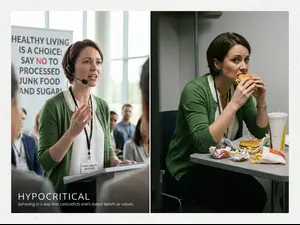
[hip-uh-krit-i-kuhl]
behaving in a way that contradicts one's stated beliefs or values

pivotal
[piv-uh-tl]
of, relating to, or serving as a pivot

animus
[an-uh-mus]
strong hostility or ill feeling

imperative
[imp-er-at-iv-e]
absolutely necessary or required; also refers to a command or urgent need.

mesmerizing
[mez-muh-rahy-zing]
completely engrossing; captivating or fascinating
inhibit
[in-hib-bit]
to prevent, restrain, stop

tortuous
[tawr-choo-uhs]
deceitfully indirect or morally crooked, as proceedings, methods, or policy; devious

ennui
[ahn-wee]
a feeling of utter weariness and discontent resulting from satiety or lack of interest; boredom

moot
[moot]
of little or no practical value, meaning, or relevance; purely academic

eponym
[ep-uh-nim]
a person after whom a discovery, invention, place, etc., is named or thought to be named

chockablock
[chok-uh-blok]
extremely full; crowded; jammed

defer
[dih-fer]
to postpone or delay something; to yield to someone