foible
nouna minor weakness or failing of character; slight flaw or defect
What Makes This Word Tick
"Foible" is one of those charming words that points out our quirks and idiosyncrasies in a delightfully gentle way. It's a noun that refers to a minor flaw or eccentricity in someone's character-essentially, the little things that make us uniquely human.
If Foible Were a Person…
Imagine Foible as that slightly absent-minded aunt who is always forgetting where she put her glasses, but whose heart is so warm you couldn't hold it against her. She possesses an endearing quality that's both whimsical and genuine, always making those around her feel special.
How This Word Has Changed Over Time
Originally, "foible" found its footing in the fencing world, where it described the weaker part of the sword blade-a far cry from today's psychological and cultural context. Over time, it morphed to reflect the softer parts of human nature that, albeit imperfect, often bring a touch of humor to life.
Old Sayings and Proverbs That Use Foible
While "foible" itself isn't frequently captured in traditional proverbs, its essence can be found in sayings like "to err is human," which remind us that quirks and mistakes are universal and deeply humanizing.
Surprising Facts About Foible
Here's a quirky tidbit: In 17th-century fencing, the word "foible" stood in contrast with "forte," which referred to the stronger part of the sword. This duality perfectly captures how our strengths and weaknesses complement one another, both in sword-fighting and in life.
Out and About With This Word
You might hear someone use "foible" after their friend insists on putting ketchup on everything or when a family member never leaves the house without triple-checking that the stove is off. It's these gentle, personalized touches that bring foible into play in daily life.
Pop Culture Moments Where Foible Was Used
On television, characters like Ross Geller from "Friends," whose obsession with dinosaurs is both his charm and his foible, illustrate how these quirks make for entertaining and relatable storytelling.
The Word in Literature
Foibles often populate the pages of classic literature where authors like Jane Austen precisely craft characters whose quaint imperfections endear them to readers, making stories more textured and true to life.
Moments in History with Foible
During the Enlightenment, society began to treasure individual eccentricities more than ever, fueling literature that highlighted personal foibles as part of the broader human tapestry. This perspective still resonates in how we understand historical figures not just for their triumphs, but also their trivial, amusing weaknesses.
This Word Around the World
In French, “foible” aligns closely with "faible," meaning weak, while in Swedish, someone's peculiar habits might be affectionately called "nyckfull." Across cultures, the concept of personalized quirks remains a gentle nod to our shared humanity.
Where Does It Come From?
Tracing its lineage back to Old French, "foible" evolved from "foible" (weak), reflecting both its etymological and metaphorical journey from swordplay to social play, mapping how small peculiarities are woven into our character fabric.
How People Misuse This Word
"Foible" is sometimes mistaken for more serious faults or vices, when in reality, it indicates benign and often amusing character traits rather than something truly detrimental.
Words It's Often Confused With
- Fault: More serious than a foible, this suggests a deficiency that needs correction.
- Folly: Signifies foolishness or lack of good sense and judgment, unlike the charming, small faults implied by foible.
- Flaw: A flaw implies a defect or imperfection, but doesn't carry the same lighthearted tone as foible.
Additional Synonyms and Antonyms
For synonyms, consider "idiosyncrasy," "peculiarity," or "quirk." Antonyms could include "strength," "virtue," or "asset," which reflect more positive or stronger traits.
Want to Try It Out in a Sentence?
His habit of cutting the crust off his sandwiches was a mere foible, one that his friends often teased him about, adding to the chorus of laughter at their lunch table."
Explore more words
11 Dumbest Things Middle-Class Americans Waste Money On
See what to cut →

penetralia
[pen-i-trey-lee-uh]
the most private or secret things

travail
[truh-veyl]
to toil or exert oneself

Little-Known Money Hacks That Could Save You Hundreds
Review the list →

Is Staying With the Same Insurer Costing You More?
Explore Your Options →
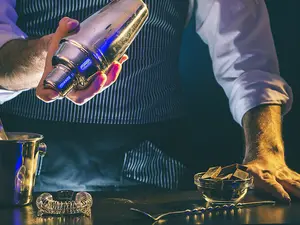
succuss
[suh-kuhs]
medicine/medical; to shake (a patient) in order to determine if a fluid is present in the thorax or elsewhere

conflate
[kuhn-fleyt]
to fuse into one entity; merge

These 10 Money Moves Could Save Seniors Hundreds
Read more →
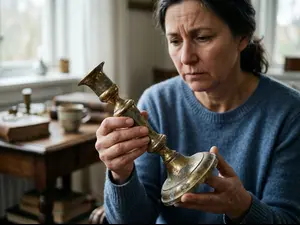
tarnish
[tahr-nish]
to lose or cause to lose luster, especially as a result of exposure to air or moisture

asylum
[as-ylu-lum]
a place of refuge, protection, a sanctuary

accretion
[uh-kree-shuhn]
an increase by natural growth or by gradual external addition; growth in size or extent

kvetch
[kfetch]
to complain persistently and annoyingly

kinetic
[ki-net-ik]
pertaining to motion

picaresque
[pik-uh-resk]
pertaining to or characterized by a form of prose fiction originally developed in Spain in which the adventures of a roguish hero are described in a series of usually humorous or satiric episodes often depicting the everyday life of the common people

minacious
[mi-ney-shuhs]
menacing; threatening

hagiography
[hag-ee-og-ruh-fee]
a biography that treats the person with excessive or undue admiration

terse
[ters]
brief and to the point

grandiloquent
[gran-dil-uh-kwuhnt]
speaking or expressed in a lofty style, often to the point of being pompous or bombastic
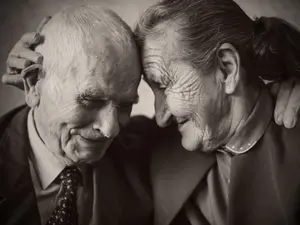
octogenarian
[ok-tuh-juh-nair-ee-uhn]
a person who is between 80 and 90 years old

incurable
[ink-ur-abl-e]
not able to be cured or remedied, often referring to diseases or conditions.