
crumbling
adjectivebreaking apart into small fragments
What Makes This Word Tick
Crumbling describes something breaking down into pieces, often through age, pressure, or neglect. It suggests an ongoing process rather than a single snap. Compared with broken, crumbling implies gradual failure and shedding.
If Word Were a Person
This word would be the old structure that keeps trying to stand, even as small pieces slip away.
How This Word Has Changed Over Time
Crumbling has stayed rooted in physical breakdown, but it’s often used figuratively for weakening systems, plans, or relationships. The image remains the same: a slow loss of integrity.
Old Sayings and Proverbs
There isn’t a fixed proverb featuring crumbling, but proverb-style ideas about “foundations” fit how people use it to talk about stability.
Surprising Facts
Crumbling often implies what caused it—time, weather, stress—without naming the cause directly. That makes it a compact way to suggest history.
Out and About With This Word
You’ll see crumbling in descriptions of buildings, cliffs, cookies, and anything that breaks into bits. It also shows up in analysis of organizations when support or structure is weakening.
Pop Culture Moments
Ruined settings and “before/after” visuals often lean on crumbling details to show decline without dialogue.
The Word in Literature
Writers use crumbling to build atmosphere, especially when decay mirrors mood. It can make a place feel fragile, haunted, or overdue for change.
Moments in History
Crumbling is commonly used for historical imagery of ruins and neglected infrastructure, where physical decay becomes a symbol of shifting eras.
This Word Around the World
Many languages have a close equivalent that combines “falling” with “breaking into pieces.” The shared idea is slow collapse into fragments.
Where Does It Come From
The word is tied to crumble, which names the action of breaking into small bits.
How People Misuse This Word
People sometimes use crumbling for anything “bad” or “messy.” More precisely, it refers to fragmentation or structural breakdown, not just disorder.
Words It’s Often Confused With
Collapsing suggests a larger, sudden fall, while crumbling suggests smaller pieces and gradual breakdown. Decaying overlaps, but decaying emphasizes rot, while crumbling emphasizes fragmentation.
Additional Synonyms and Antonyms
Additional Synonyms: fragmenting, breaking down, flaking Additional Antonyms: sound, sturdy, unbroken
Example Sentence
"The crumbling stone steps forced them to climb slowly and watch their footing."
Explore more words

encroaching
[en-kroh-ching]
advancing beyond proper, accepted, or usual limits; making gradual inroads into or onto something

contrived
[kuhn-trahyvd]
obviously planned or forced; artificial; strained

cackle
[k-akl-e]
to laugh in a high-pitched, often unpleasant manner; also refers to the sound made by chickens.

toplofty
[top-lawf-tee, -lof-]
condescending; haughty

quisling
[kwiz-ling]
a person who betrays his or her own country by aiding an invading enemy, often serving later in a puppet government; a traitor

lucubrate
[loo-kyoo-breyt]
to write learnedly

amalgamate
[uh-mal-guh-meyt ]
to mix or merge, as to make a combination; blend; unite; combine

prophet
[prof-it]
a person regarded as an inspired teacher or proclaimer of the will of god

meander
[mee-an-der]
to wander aimlessly; ramble

revel
[rev-uhl]
to take great pleasure or delight

apex
[ey-peks]
the tip, point, or vertex; summit

beamish
[bee-mish]
beaming with happiness, optimism, or anticipation
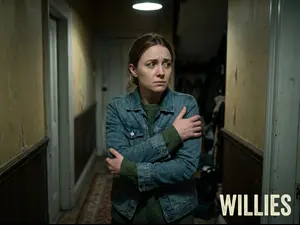
willies
[wil-eez]
a strong feeling of nervousness or unease

impetuous
[im-pech-oo-uhs]
acting or done quickly and without thought or care

ambidextrous
[am-bi-dek-struhs]
able to use both hands equally well

chutzpah
[hutz-pah]
informal shameless audacity; impudence