
boisterous
adjectivenoisy, energetic, and cheerful; rowdy
What Makes This Word Tick
Boisterous describes energy that is loud, cheerful, and hard to contain. It often belongs to crowds, children, celebrations, or groups having a noisy good time. The word can feel positive or mildly critical depending on the setting.
If Boisterous Were a Person…
Boisterous would burst through the door laughing before anyone announced them. They would clap too loudly, cheer too soon, and fill the room with motion. Their energy would be friendly, but not exactly quiet.
How This Word Has Changed Over Time
Boisterous comes from Middle English boistous, meaning "rough, coarse," with an uncertain origin. The modern word has kept some of that roughness but added cheer and liveliness. It now often describes noise that comes with high spirits.
Old Sayings and Proverbs
Boisterous is not commonly found in traditional proverbs, but its meaning fits old advice about keeping joy within bounds. An imagined proverb-like line might be: "A boisterous feast wakes even the quiet house." It shows how lively noise can spread through a place.
Surprising Facts
Boisterous is not always negative. A boisterous crowd at a game may be cheerful and excited, while a boisterous group in a library may feel disruptive. The setting decides whether the energy feels welcome.
Out and About With This Word
You can use boisterous for crowds, parties, classrooms, playgrounds, sports fans, and family gatherings. It fits moments where sound and energy rise together. Use it when lively behavior becomes impossible to ignore.
Pop Culture Moments Where Boisterous Was Used
It would fit naturally alongside School of Rock, where loud enthusiasm and group energy drive the mood. It also suits Jumanji, where action and excitement can turn ordinary spaces into noisy chaos. In both cases, boisterous describes cheerful energy that refuses to stay quiet.
The Word in Literature
In literature, boisterous can bring a crowd or room to life. It suits scenes filled with laughter, shouting, celebration, or rowdy movement. The word helps readers hear the energy of a place.
Moments in History with Boisterous
In a marketplace, festival square, or stadium crowd, boisterous can describe people gathered in noisy excitement. The setting makes the sound part of the scene. The word keeps the tone lively rather than purely disorderly.
This Word Around the World
Many languages have words for noisy, cheerful energy. Boisterous gives English a word that mixes volume, movement, and high spirits. It is rowdy, but often with joy behind it.
Where Does It Come From?
Boisterous comes from Middle English boistous, meaning "rough, coarse," though its deeper origin is uncertain. That background helps explain why the word can still suggest rowdiness. In modern use, boisterous often adds cheer to the noise.
How People Misuse This Word
Boisterous should not be used for every loud sound. A siren may be loud, but it is not usually boisterous. The word works best when noisy energy comes from people, movement, or lively behavior.
Words It's Often Confused With
Boisterous can be confused with noisy, but noisy is broader and more neutral. It can also overlap with rowdy, though boisterous often sounds more cheerful. The word suggests energy as well as sound.
Additional Synonyms and Antonyms
Additional synonyms: raucous, spirited, exuberant, loud Additional antonyms: subdued, orderly, hushed, restrained
Want to Try It Out in a Sentence?
The boisterous crowd cheered loudly as the team scored the winning goal.
Explore more words

11 Dumbest Things Middle-Class Americans Waste Money On
See what to cut →
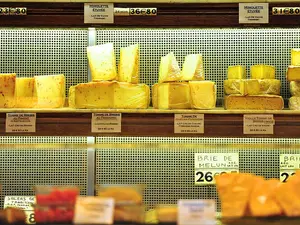
cheesemonger
[cheez-muhng-ger, cheez‐mong‐ger]
a merchant who sells cheese and other dairy products

brackish
[brak-ish]
having a slightly salty or briny flavor

Little-Known Money Hacks That Could Save You Hundreds
Review the list →

Is Staying With the Same Insurer Costing You More?
Explore Your Options →

highfalutin
[hahy-fuh-loot-n]
seeming or trying to seem superior, important, etc.; pompous; pretentious

miscreant
[mis-kree-uhnt]
a vicious or depraved person; villain

These 10 Money Moves Could Save Seniors Hundreds
Read more →

fisticuffs
[fis-tuh-kuhfs]
combat with the fists

sneaky
[snek-ee]
behaving in a secretive or deceitful way

minacious
[mi-ney-shuhs]
menacing; threatening

arrival
[uh-ry-vul]
the act of reaching a destination

threnody
[thren-uh-dee]
a poem, speech, or song of lamentation, especially for the dead; dirge; funeral song

fussbudget
[fuhs-buhj-it]
a fussy or needlessly fault-finding person

dodge
[doj]
to avoid something by moving quickly or skillfully

illusory
[il-loo-suh-ree]
based on illusion; not real

catastrophize
[kuh-tas-truh-fahyz]
to view or talk about (an event or situation) as worse than it actually is, or as if it were a catastrophe

rigmarole
[rig-muh-rohl]
confused, incoherent, foolish, or meaningless talk

juvenile
[joo-vuh-nl]
of, pertaining to, characteristic of, or suitable or intended for young persons; youthful

choleric
[kol-er-ik]
extremely irritable or easily angered; irascible