
shambolic
adjectivechaotic, disorganized, or confused
What Makes This Word Tick
Shambolic describes a situation that has fallen into disorder. It is more than messy because it suggests confusion, weak planning, or lack of control. The word often fits events or systems that seem to be coming apart while people are still trying to run them.
If Shambolic Were a Person…
Shambolic would arrive late with the wrong papers, the wrong room number, and three different explanations. They would keep moving, but not in a clear direction. Their energy would be busy without being organized.
How This Word Has Changed Over Time
Shambolic comes from shambles, a word connected with chaos and disorder. Its background reaches back to Middle English schamel. In modern English, shambolic means chaotic, disorganized, or confused.
Old Sayings and Proverbs
Shambolic is not commonly found in traditional proverbs, but its meaning fits old warnings about poor planning. An imagined proverb-like line might be: "A shambolic cart loses the road before the horse begins." It suggests that disorder can ruin a task before the real work starts.
Surprising Facts
Shambolic can describe more than a messy room. A shambolic event may have confused directions, missing leadership, and no clear plan. The word points to disorder in how something works.
Out and About With This Word
You can use shambolic for meetings, events, offices, trips, projects, and public plans. It fits airports, school fairs, rehearsals, and rushed group efforts. Use it when confusion and disorganization shape the whole situation.
Pop Culture Moments Where Shambolic Was Used
It would fit naturally alongside The Office, where workplace plans can collapse into awkward confusion. It also suits Home Alone, where messy schemes and poor coordination create comic disorder. In both cases, shambolic describes chaos caused by weak organization.
The Word in Literature
In literature, shambolic suits scenes where plans unravel in public. It can describe a household, expedition, ceremony, or office that cannot keep its parts together. The word gives disorder a comic or critical sharpness.
Moments in History with Shambolic
In a crowded train station, emergency meeting, or badly planned festival, shambolic can describe confusion caused by poor organization. The setting makes the disorder visible. The word keeps attention on the lack of structure.
This Word Around the World
Many languages have words for disorder, confusion, and bad organization. Shambolic gives English a vivid adjective for chaos that feels almost embarrassing. It is useful when messy is too mild.
Where Does It Come From?
Shambolic is derived from shambles, meaning chaos, with a background in Middle English schamel. That origin helps explain the word's sense of disorder. In modern English, shambolic means chaotic, disorganized, or confused.
How People Misuse This Word
Shambolic should not be used for every untidy space. A desk can be messy without being shambolic. The word works best when disorder affects how something functions.
Words It's Often Confused With
Shambolic can be confused with messy, but messy can be only physical untidiness. It can also overlap with chaotic, though shambolic often suggests poor organization or failed planning. The word points to disorder in action.
Additional Synonyms and Antonyms
Additional synonyms: haphazard, muddled, disordered, ramshackle Additional antonyms: coherent, well-run, planned, coordinated
Want to Try It Out in a Sentence?
The event was shambolic, with no clear organization or leadership.
Explore more words
11 Dumbest Things Middle-Class Americans Waste Money On
See what to cut →

calumniate
[kuh-luhm-nee-eyt]
to make false and malicious statements about; slander

radiate
[rey-dee-eyt]
to emit energy or heat in the form of rays or waves

Little-Known Money Hacks That Could Save You Hundreds
Review the list →

Is Staying With the Same Insurer Costing You More?
Explore Your Options →

penetralia
[pen-i-trey-lee-uh]
the most private or secret things

dodge
[doj]
to avoid something by moving quickly or skillfully

These 10 Money Moves Could Save Seniors Hundreds
Read more →

grift
[grift]
a group of methods for obtaining money falsely through the use of swindles, frauds, dishonest gambling, etc.

illicit
[ih-lis-it]
not legally permitted or authorized; unlicensed; unlawful

mulct
[muhlkt]
to punish (a person) by fine, especially for a misdemeanor

boss
[bawss]
a person in charge of others

melancholia
[mel-uhn-koh-lee-uh]
a mental condition characterized by great depression of spirits and gloomy forebodings

aloof
[uh-loof]
reserved or reticent; indifferent; disinterested
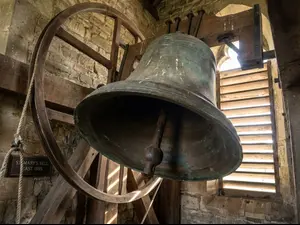
bell
[bel]
a hollow object that makes a ringing sound when struck

tepid
[tep-id ]
moderately warm; lukewarm

surmise
[ser-mahyz]
to think or infer without certain or strong evidence; conjecture; guess

dodecahedron
[doh-dek-uh-hee-druhn]
a three-dimensional shape having twelve plane faces, in particular a regular solid figure with twelve equal pentagonal faces

mesmerizing
[mez-muh-rahy-zing]
completely engrossing; captivating or fascinating

underlie
[uhn-der-lahy]
to lie under or beneath; be situated under