
amber
nouna yellowish-orange fossilized tree resin often used in jewelry.
What Makes This Word Tick
Amber is a concrete, tactile word: it names fossilized resin, often prized for jewelry and its warm, glowing color. Even when used descriptively, it tends to evoke that same honeyed tone—something lit from within.
If Amber Were a Person…
Amber would be the person who always seems warmly lit, like they carry a small sunset in their pocket. They’re calm, nostalgic, and quietly striking—more glow than glitter.
How This Word Has Changed Over Time
The core meaning stays tied to resin, but amber has also become a convenient color-word in descriptive language. That shift keeps the material sense intact while letting writers borrow its warmth for scenes and objects.
Old Sayings and Proverbs
Amber rarely appears in traditional proverbs, but it fits proverb-style ideas about “what time preserves.” Because it’s a preserved resin, it naturally symbolizes something held intact through change.
Surprising Facts
Amber often carries a double punch of meaning: it’s a substance and a color, so a sentence can lean physical or purely visual. Because it suggests warmth without being “bright,” it’s a favorite for moody, late-day imagery.
Out and About With This Word
You’ll see amber in nature writing, jewelry descriptions, museum labels, and any place where color matters. It also appears in storytelling when a writer wants a specific shade that feels softer than orange and richer than yellow.
Pop Culture Moments Where Amber Was Used
In pop culture, amber’s concept often shows up as a visual cue for warmth, nostalgia, or a “held-in-time” feeling. It’s the kind of detail used to set a tone—cozy, golden, and slightly old-world.
The Word in Literature
In literary writing, amber works as a sensory anchor: it’s specific, vivid, and instantly visual. Authors use it to paint light and atmosphere with a warm tint, often adding a gentle feeling of preservation or memory.
Moments in History with Amber
Throughout history, amber fits contexts where people value durable, beautiful materials for adornment and trade. The concept matters because it represents how natural materials can become cultural objects—kept, carried, and treasured.
This Word Around the World
Many languages have a dedicated word for amber as a material, and some also use it as a color descriptor.
Where Does It Come From?
Amber comes down through Latin-root usage as a name for the fossilized resin itself. Its long-standing use reflects how distinctive the material is—recognizable enough to keep its identity across languages and eras.
How People Misuse This Word
People sometimes use amber to mean any orange-ish shade, even when the tone is closer to neon orange or deep rust. Keeping it tied to that yellow-orange, honeyed warmth helps the word land more precisely.
Words It’s Often Confused With
Gold is close in color but suggests metal rather than resin. Honey overlaps in warmth but feels more edible and soft, while orange is broader and can be much brighter than amber typically implies.
Additional Synonyms and Antonyms
Additional Synonyms: fossil resin, warm yellow-orange, tawny Additional Antonyms: opaque, dark, murky
Want to Try It Out in a Sentence?
"The amber glow of the streetlight illuminated the quiet neighborhood."
Explore more words
11 Dumbest Things Middle-Class Americans Waste Money On
See what to cut →

confer
[kuhn-fur]
to consult together; compare opinions; carry on a discussion or deliberation

meddle
[med-l]
to involve oneself in a matter without right or invitation; interfere officiously and unwantedly
Little-Known Money Hacks That Could Save You Hundreds
Review the list →

Is Staying With the Same Insurer Costing You More?
Explore Your Options →
enlarge
[en-larj]
to make something bigger or more extensive
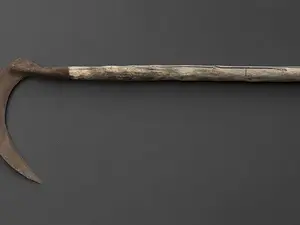
scythe
[sahyth]
an agricultural tool with a long, curving blade that sits at an angle on the handle

These 10 Money Moves Could Save Seniors Hundreds
Read more →

grift
[grift]
a group of methods for obtaining money falsely through the use of swindles, frauds, dishonest gambling, etc.

act
[akt]
to take action or perform a role in a play or situation
provident
[prov-i-duhnt]
having or showing foresight; providing carefully for the future

defenestrate
[dee-fen-uh-streyt]
to suddenly remove (a person) from an important position or office

banausic
[buh-naw-sik]
serving utilitarian purposes only; mechanical; practical

promenade
[prom-uh-nahd]
to go for or take part in a stroll or walk, especially in a public place, as for pleasure or display

insolent
[in-suh-luhnt]
impudent, contemptuous

park
[pahrk]
a piece of land maintained by a city or town as a place of beauty or play.